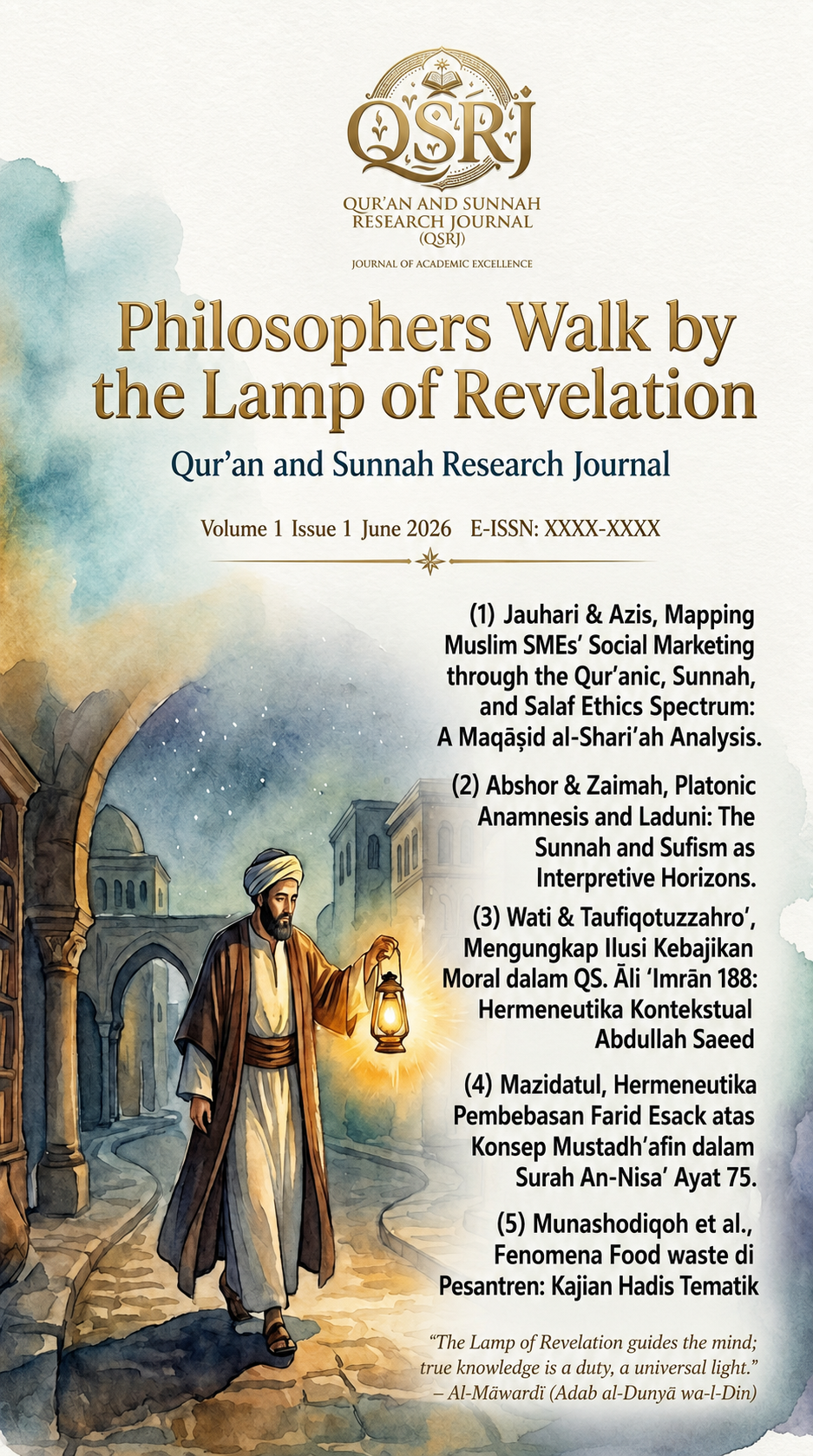
Fenomena Food waste di Pesantren
Kajian Hadis Tematik
Keywords:
food waste, hadith studies , isrāf , tabdhīr , eco-pesantrenAbstract
Food waste has emerged as a significant environmental, social, and ethical issue, including within Islamic boarding schools (pesantren), where collective food consumption often generates substantial amounts of food leftovers. This study aims to examine the relevance of Prophetic traditions (hadith) concerning isrāf (excessiveness), tabdhīr (wastefulness), and cleanliness in addressing the phenomenon of food waste in pesantren. This research employs a qualitative library research design using the thematic hadith (maudhu‘i) approach. Primary data were obtained from hadith collections, including Sunan Ibn Mājah, Sunan al-Nasā’ī, Musnad Aḥmad, and Ṣaḥīḥ Muslim, while secondary data were gathered from classical commentaries, scholarly literature, and contemporary studies on food waste. The findings reveal that the selected hadiths possess acceptable levels of authenticity and collectively establish an ethical framework emphasizing moderation in consumption, prohibition of wastefulness, social responsibility, and environmental cleanliness. These values demonstrate strong relevance to contemporary food waste practices within pesantren, particularly regarding excessive food portions, uneaten meals, and inadequate waste management systems. Furthermore, the study finds that the eco-pesantren approach provides a practical model for translating prophetic values into sustainable food management practices through food planning, responsible consumption, environmental education, and systematic organic waste management. The study concludes that hadith teachings offer both moral guidance and practical principles for fostering sustainable consumption and environmental stewardship in Islamic educational institutions.
Downloads
Published
Issue
Section
License
Copyright (c) 2026 Ery Munashodiqoh, Ulfa Rika Lestari, Khoridatul Anisah, Dini Hikmah Alfaza (Author)

This work is licensed under a Creative Commons Attribution-ShareAlike 4.0 International License.