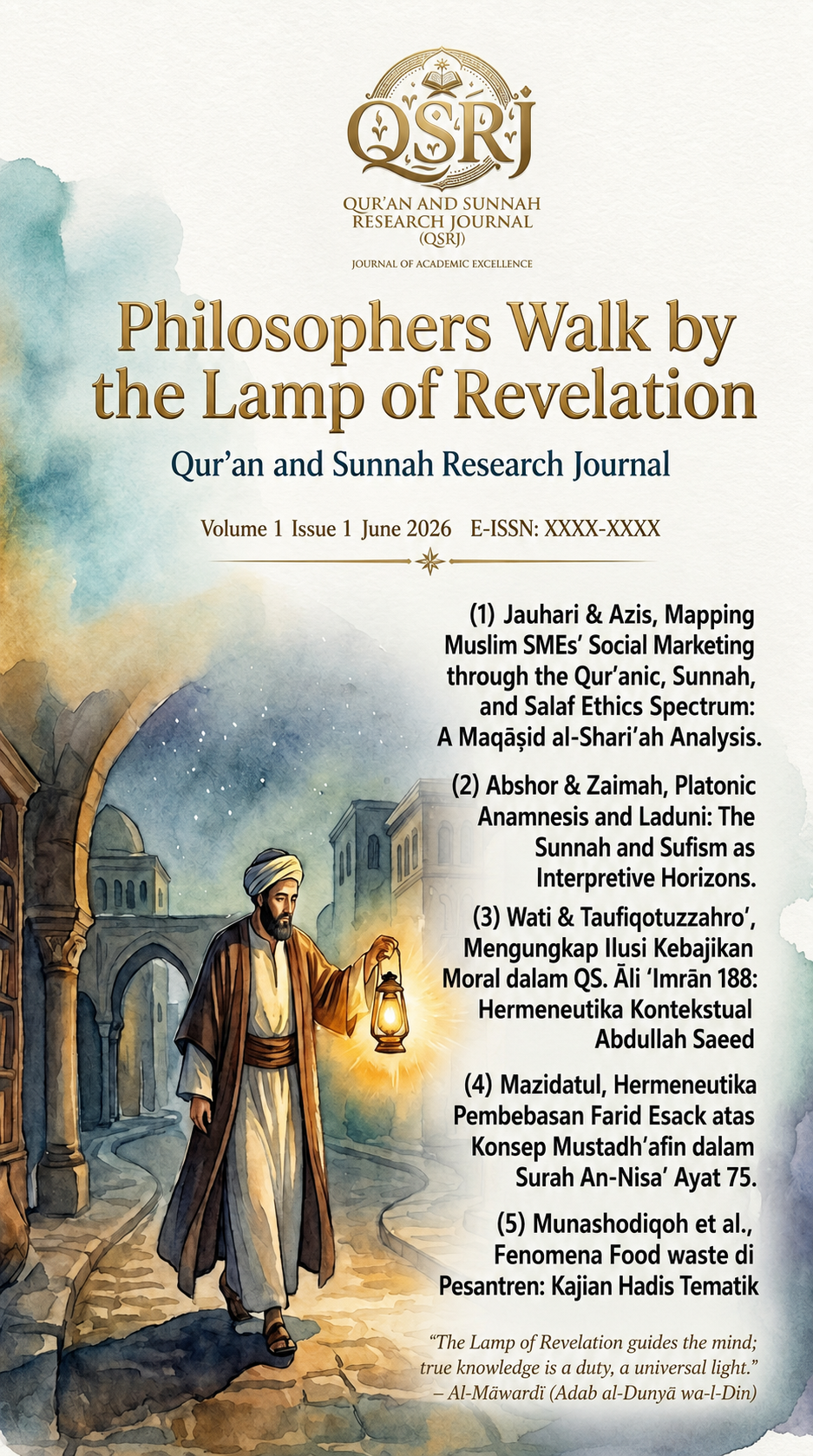
Platonic Anamnesis and Laduni Epistemology
The Sunnah and Sufism as Interpretive Horizons
Keywords:
Plato, anamnesis , fitrah , Sufism , ‘ilm ladunnī , soul epistemologyAbstract
This study examines Platonic anamnesis within the horizon of the Sunnah and Sunni Sufism through a thematic literature study focused on the relationship between the soul, primordial disposition, and spiritual knowledge. Previous studies on Plato generally concentrated on recollection as an epistemological theory, while studies on Islamic spirituality often discussed ‘ilm ladunnī, qalb, and fitrah within isolated theological or mystical frameworks. This research brings these discourses into a comparative reflective reading by analysing Platonic dialogues such as Meno, Phaedo, and Phaedrus, alongside prophetic traditions and classical Sufi texts including al-Risālah al-Ladunniyyah, al-Risālah al-Qushayriyyah, Kashf al-Maḥjūb, and Kitāb al-Lum‘a. The findings show that Plato positions anamnesis as the soul’s recollection of universal truth through its ontological affinity with the intelligible realm, whereas the Sunnah and Sunni Sufism place knowledge within the framework of fitrah, divine guidance, purification of the heart, and spiritual discipline. The study also finds that the concept of knowledge in both traditions exceeds sensory empiricism and instrumental rationality, although they differ fundamentally in metaphysical structure and theological authority. In Plato, knowledge arises through recollection and the soul’s dialectic; in the Islamic tradition, knowledge develops through revelation, tazkiyah al‑nafs (purification of the self), and divine illumination. Consequently, this study concludes that the dialogue between anamnesis and ‘ilm ladunnī is located in their shared concern for the existential condition of the human soul and its orientation toward truth. Future research should undertake comparative and empirical studies exploring how anamnesis and ʿilm ladunnī inform contemporary spiritual practices across traditions.
Downloads
Published
Issue
Section
License
Copyright (c) 2026 Faiq Ubaidillah Ulil Abshor (Author); Nely Rahmawati Zaimah (Translator)

This work is licensed under a Creative Commons Attribution-ShareAlike 4.0 International License.